Refile Font: Elevate Small Business Branding
As a small business owner, I know that every visual touchpoint matters. From the logo on my website header to the sticker sealing a package, typography communicates quality before a customer even reads a single word. Finding a typeface that balances vintage charm with modern clarity is often the missing link in establishing a trustworthy brand identity. Refile is a display serif font designed specifically for these high-impact moments. It offers the sophistication needed for premium branding without feeling outdated or overly ornate. For entrepreneurs managing their own design assets, Refile provides a versatile solution for creating consistent, professional visuals across packaging, social media, and printed materials.
Defining the Refile Aesthetic for Modern Brands
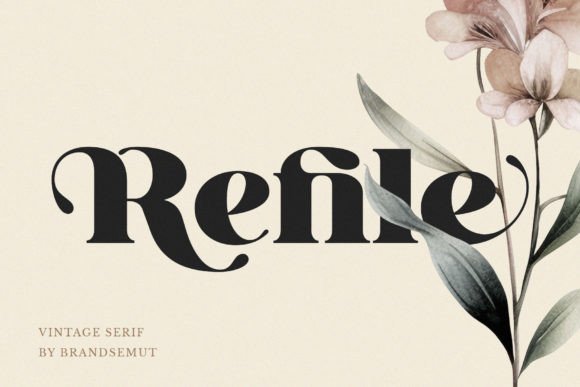
Refile sits at a unique intersection in typography. It carries the warmth and character of vintage serif fonts but maintains the clean lines required for contemporary digital and print applications. This duality is essential for businesses that want to evoke nostalgia or craftsmanship while remaining relevant to today’s consumers. The letterforms are distinct yet legible, avoiding the extreme contrast that can make some display fonts difficult to read at smaller sizes.
The personality of this typeface leans towards refined, artisanal, and established. It does not scream for attention like a bold sans serif; instead, it invites the viewer to lean in. This makes it particularly effective for brands built on storytelling, heritage, or personal connection. Whether you are selling handmade ceramics, offering life coaching services, or running a boutique café, Refile projects an air of intentional quality. It signals to customers that care has been taken in every detail of the business, from product formulation to visual presentation.
Leveraging Ligatures and Alternates for Custom Logos
One of the most practical features for DIY branding is the inclusion of ligatures and alternates. In standard fonts, letters simply sit next to each other. In Refile, specific letter combinations connect or interact to create fluid, custom-looking wordmarks. This is invaluable when designing a logo without hiring a professional lettering artist. By utilizing these built-in design elements, a simple business name transforms into a unique brand mark.
Alternates further extend this customization. Swapping a standard capital "R" or "A" for a stylistic alternate can change the entire mood of a headline. For a beauty brand, a swash-heavy alternate might convey luxury and elegance. For a rustic bakery, a simpler form might feel more grounded and approachable. These OpenType features allow small business owners to tailor the font to their specific niche without needing multiple typeface families. It turns a static font file into a flexible design system capable of adapting to different campaigns and seasonal promotions.
Practical Applications Across Business Touchpoints
Consistency builds trust, and Refile excels at unifying disparate marketing channels. When customers see the same distinctive typography on Instagram, your website, and physical packaging, it reinforces brand recall. Here is how this display serif performs in real-world business scenarios:
- Product Packaging and Labels: On candle jars, cosmetic bottles, or food pouches, Refile remains legible even when scaled down. Its serif structure guides the eye along curved surfaces better than geometric sans serifs, making product names stand out on crowded shelves.
- Social Media Graphics: Instagram carousels and Pinterest pins require instant readability. Refile works beautifully as a headline font over textured backgrounds or solid colors. Its vintage undertones perform exceptionally well in lifestyle photography overlays, adding context without obscuring the image.
- Website Headers and Banners: Digital screens demand clarity. Refile renders sharply on mobile devices and desktops alike. Using it for H1 and H2 tags creates a strong visual hierarchy that separates content sections while maintaining an editorial, magazine-like aesthetic.
- Print Collateral: Business cards, thank-you notes, and menus benefit from the tactile quality of this typeface. In print, the ink spread adds a subtle weight to the serifs, enhancing the premium feel of physical interactions with customers.
Strategic Font Pairing for Readability
While Refile is a powerful display font, it should rarely be used for body text. To maintain professionalism and ensure customers can easily read detailed information, pair it with a complementary typeface. A clean, neutral sans serif font like Montserrat or Open Sans creates excellent contrast. The simplicity of the supporting font allows Refile’s character to shine without competing for attention.
Alternatively, pairing Refile with a minimalist serif for body copy can create a cohesive, editorial look suitable for blogs or long-form newsletters. The key is contrast in weight and style. If Refile is used in a bold weight for headlines, use a light or regular weight for subheads and body text. Avoid pairing it with other highly decorative or script fonts, as this creates visual clutter and reduces readability. Remember that in business communication, clarity always trumps decoration. Use Refile to capture attention, and use functional fonts to deliver the message.
Testing and Licensing for Commercial Success
Before committing Refile to your entire brand identity, test it in context. Create mockups of your actual business cards, website hero section, and product labels. View these designs on different devices and in various lighting conditions. What looks elegant on a 27-inch monitor might lose definition on a smartphone screen or when printed on uncoated paper. Testing prevents costly rebranding mistakes and ensures the font serves its intended purpose effectively.
Equally important is understanding commercial licensing. As entrepreneurs, we must protect our businesses legally. Always verify that your font license covers all intended uses. Some licenses cover basic desktop use for logos and social media but require extended licenses for merchandise, e-books, or large-scale advertising. If you plan to sell products featuring Refile directly (such as greeting cards or apparel), or if you are a designer creating templates for others, confirm that your license permits these specific commercial activities. Investing in the correct license upfront safeguards your brand against future legal issues and supports the type designers who create these valuable tools.
Typography is one of the most cost-effective investments a small business can make. A premium font like Refile bridges the gap between amateur design and professional branding, allowing independent creators to compete visually with larger companies. By understanding its strengths, utilizing its special features responsibly, and applying it consistently across touchpoints, you build a brand foundation that feels both timeless and authentically yours. The right typeface does not just display words; it embodies the values and quality of the business behind them.